Thursday, May 3, 2018

Making it Personal: Wildlife Conservation in Singapore


As a land-scarce country, space is a precious commodity in Singapore. The government is extremely conscious of the importance in ensuring the efficient use of land to maximize the country’s economic growth. Masterplans are drawn decades in advance, often prioritizing the state’s economic goals and thus creating tensions between the other socio-political goals of the country. One such example is the tensions between wildlife conservation and economic development.

Turtle-y gone for the greater good?

Recently the Live Turtle and Tortoise Museum made the news when the owner, Ms. Connie Tan, appealed to PM Lee for help regarding the museum’s eviction from the Chinese Garden, its home for the last 16 years. The only tortoise and turtle museum in the world, the museum currently holds over 500 tortoises and turtles, most of which are either rescues or abandoned (Lim, 2017). Ms. Tan and her father started the museum in an effort to educate children about tortoises and turtles. Workshops catered to children and guided tours are conducted, creating an educational and interactive experience. This is especially so since the animals are allowed to roam freely, allowing visitors to interact with them (Lim, 2017).

However, the museum is not included in the Jurong Lake District project which seeks to transform the area into Singapore’s second central business district. National Development Minister Lawrence Wong spoke about how the project will create a "better, smarter and more sustainable centre for businesses", thus providing more jobs and opportunities for Singaporeans (Phua, 2017). It is estimated that the huge undertaking will create more than 100,000 new jobs in sectors, such as technology, and 20,000 homes as well (Tee, 2018).

When news of the museum’s plight spread, Singaporeans responded with a tremendous show of support. Donations surged and many even offered their homes to Ms. Tan as temporary housing for the animals. PM Lee responded to Ms. Tan’s appeal swiftly, offering reassurances that relevant authorities would look into her case.

Growing public support

The generous public support garnered by the museum seems to be the latest product in a rather curious trend in Singapore - public interest in wildlife conservation arguably has exceeded the state’s expectations in recent years. While economic growth is still very much the top priority of the state, it is undeniable that wildlife conservation in Singapore has been receiving more attention from the government. More efforts have been put into the protection of our natural heritage and wildlife. Natural sites such as Sungei Buloh Wetland Reserve and Bukit Timah Nature Reserve generally include an educational element and are modified to increase public awareness of environmental conservation through sustainable interactions with such natural spaces. From conducting school trips to nature reserves to student projects centered on wildlife, even our education system attempts to highlight the importance of wildlife conservation. This has invariably translated to a growing public interest in wildlife conservation as Singaporeans grow increasingly aware of our unique flora and fauna. As such, Singaporeans now are less willing to sacrifice natural spaces for the sake of economic progress, resulting in increasing private involvement in the protection of such spaces and wildlife.

Is it really wildlife conservation?

Can the Live Turtle and Tortoise Museum truly be considered wildlife conservation? After all, the animals are not truly living in their natural habitat but rather kept as pets, tame and familiar with human interaction. If not, is there really any value to the museum in the fight for wildlife conservation? To this, I say, yes there is.

The significance of the museum lies not only in the survival of the animals or the actual conservation of any natural space but rather in its role as an indicator of the state’s attitude towards such private initiatives. Unlike other wildlife conservation projects, the museum is arguably the only one started entirely by a citizen with the aim of education. It represents something entirely different; it shows Singaporeans taking a much more proactive stance in wildlife conservation. The considerable support and attention received by the museum show how local socio-political opinions of wildlife conservation efforts have changed. No longer do we see such efforts as redundant. We do not merely accept the sacrifices made in the name of economic development nor do we consider the plans made by the state to be set in stone.

The realization that the public had a responsibility in wildlife conservation as well was further driven across by the successful protection of Chek Jawa from reclamation in 2001 when public outcry played a major role in staying the state’s hand (Wee & Hale, 2008). An intertidal zone situated at the eastern shore of Pulau Ubin, Chek Jawa possesses unique marine life not found anywhere off the main island of Singapore (Tan & Yeo, 2003). When reclamation plans were announced, volunteers like Joseph Lai, N. Sivasothi and Ria Tan came forward spontaneously, to help collect, identify and catalogue the organisms found there.

These volunteers came from all walks of life and shared a similar passion for protecting the wildlife in Singapore. Hundreds of visitors streamed in during periods of low tide after news of Chek Jawa’s possible fate spread. Tours were organized by volunteers to minimise damage caused and a long term sustainable guide system was implemented too.
Compared to the 1989 Sungei Buloh Nature Park conservation proposal which only involved a small group, the Malayan Nature Society-Singapore (MNS-S) later known as Nature Society (Singapore) (NSS), the response to Chek Jawa was astounding (Wee & Hale, 2008).

The nuanced significance of the Live Turtle and Tortoise Museum in this context explains how any action taken by the government now will likely set a precedent and influence the future of civilian-driven wildlife conservation efforts. Should the museum receive governmental help, it will indicate the state’s support for such civilian-started initiatives and possibly encourage Singaporeans to take a more aggressive approach in protecting our wildlife.

This may be immediately reflected in the Cross-Island Line debate where the limelight is once again on the conflict between development and wildlife conservation. It is not a far stretch to assume that a positive government response to the museum’s plight will likely encourage a much louder pushback in the debate of the Cross-Island Line where many more Singaporeans are already protesting far more than they would have 20 years ago.

From Sungei Buloh Wetland Reserve to the ongoing debate about the Cross-Island Line, there is an undeniably marked increase in the number of Singaporeans getting involved in wildlife conservation efforts. Perhaps, ironically the absence of wildlife in our urbanized environment has made wildlife conservation personal to us - after all, does absence not make the heart fonder?


Reference List:

Lim, Y. (2017). Bye, turtles? Jurong turtle museum to close in March. The Straits Times. Retrieved from http://www.straitstimes.com/singapore/bye-turtles

Phua, R. (2017). Jurong Lake District to create more than 100,000 jobs, 20,000 homes. Channel Newsasia. Retrieved from https://www.channelnewsasia.com/news/singapore/jurong-lake-district-to-create-more-than-100-000-jobs-20-000-9155708

Tan, R., & Yeo, A. (2003). Chek Jawa guidebook. Singapore: Simply Green.

Tee, C. (2018). Extension for Chinese Garden turtle museum lease being considered. The Straits Times. Retrieved from http://www.straitstimes.com/singapore/possible-extension-for-chinese-garden-turtle-museum-lease-being-considered

Wee, Y., & Hale, R. (2008). The Nature Society (Singapore) And The Struggle To Conserve Singapore’s Nature Areas. NATURE IN SINGAPORE, 1, 41-49. Retrieved from https://lkcnhm.nus.edu.sg/dna/docs/632e6c269d327908ca4676f28b7651fd.pdf

Saturday, April 29, 2017

Re-use your ‘notebook’ over and over again with the reMarkable!

The digital age is a conundrum of tradition and progress. We constantly seek out new technologies to make our environment paperless but yet feel the magnetic pull of the pen and paper. This conflict between digital and analogue may have a resolution in reMarkable – an E Ink Tablet users can write on.

What is the reMarkable?

The reMarkable tablet delivers the experience of reading and writing on a 10.3 inch digital screen with the feel of authentic paper. The company emphasizes the ultra high friction materials used for the screen to mimic the sensation of actual paper. CANVAS, the proprietary low-latency technology utilised, also provides a faster refresh rate and over 1000 levels of pressure. This helps mitigates the notoriously slow refresh rate of e-paper.
Unlike most tablets, the reMarkable is intentionally designed to be minimalist. It can only display ebooks and documents while allowing users to scribble as they will on the content displayed. With a sleek exterior, it is sure to be a hit with students as a replacement for the heavy textbooks and notebooks they need! Furthermore, all of your notes and drawings can be synced to the cloud service and be accessed on your mobile devices. Wi-Fi connectivity also makes it easy to collaborate with others on the reMarkable.
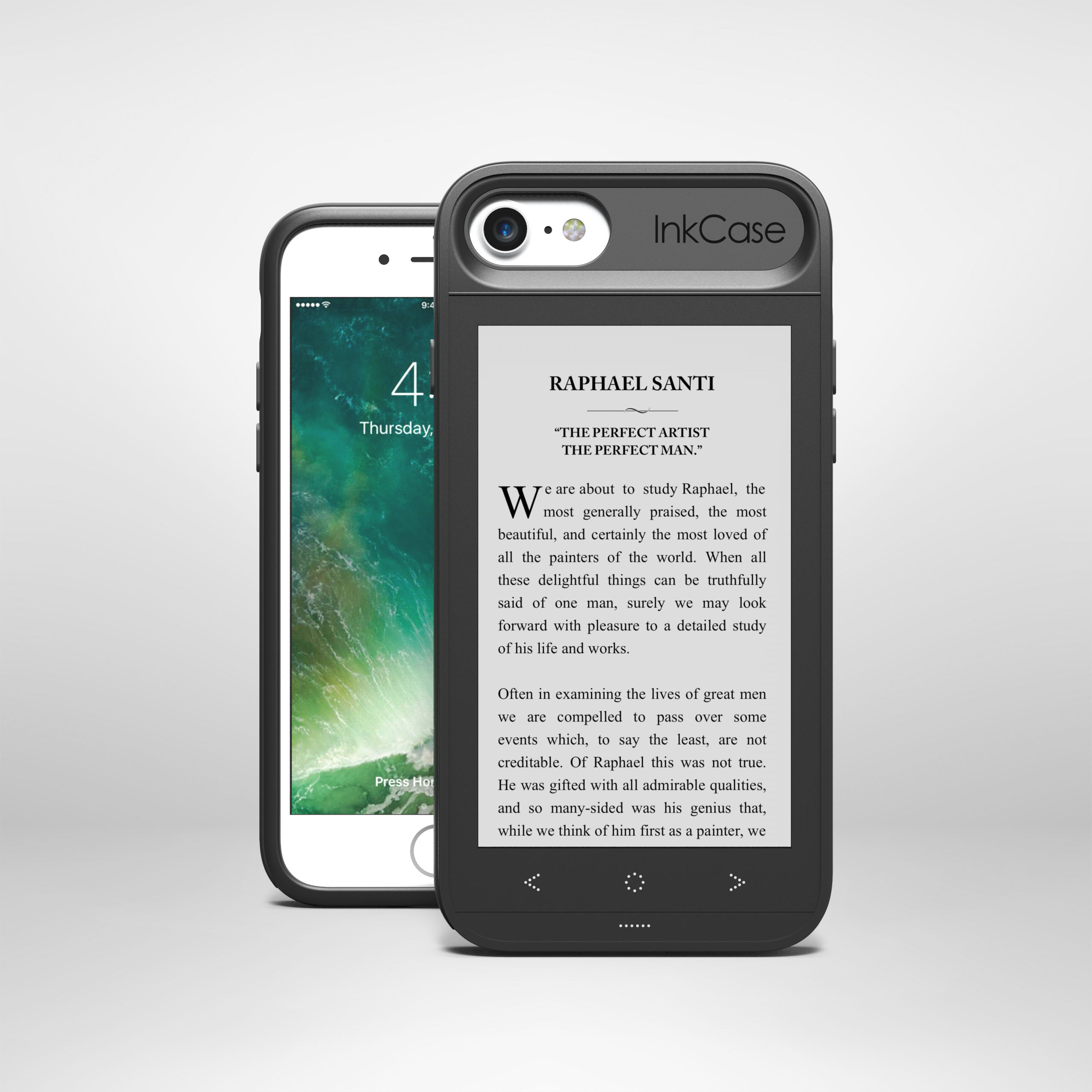
The lack of glass parts ensures that the reMarkable is a rather sturdy device, able to withstand drops. The device is able to last for days on a single charge thanks to the extremely low power consumption of the E Ink display. InkCase also makes use of this particular characteristic of E Ink to enhance its functionality. It adds a secondary screen to the back of your iPhone, allowing you to read anywhere, any time.
InkCase E Ink e-reader
Keep your favourite books in your pocket!

While the reMarkable is indeed remarkable, it comes at a comparatively steep price. Preorders are available for $379 currently. A complete set of the tablet, pen and folio case will cost $716.

(Published on Oaxis, 30 April 2017)

Onyx Boox Typewriter may be the next game-changer.

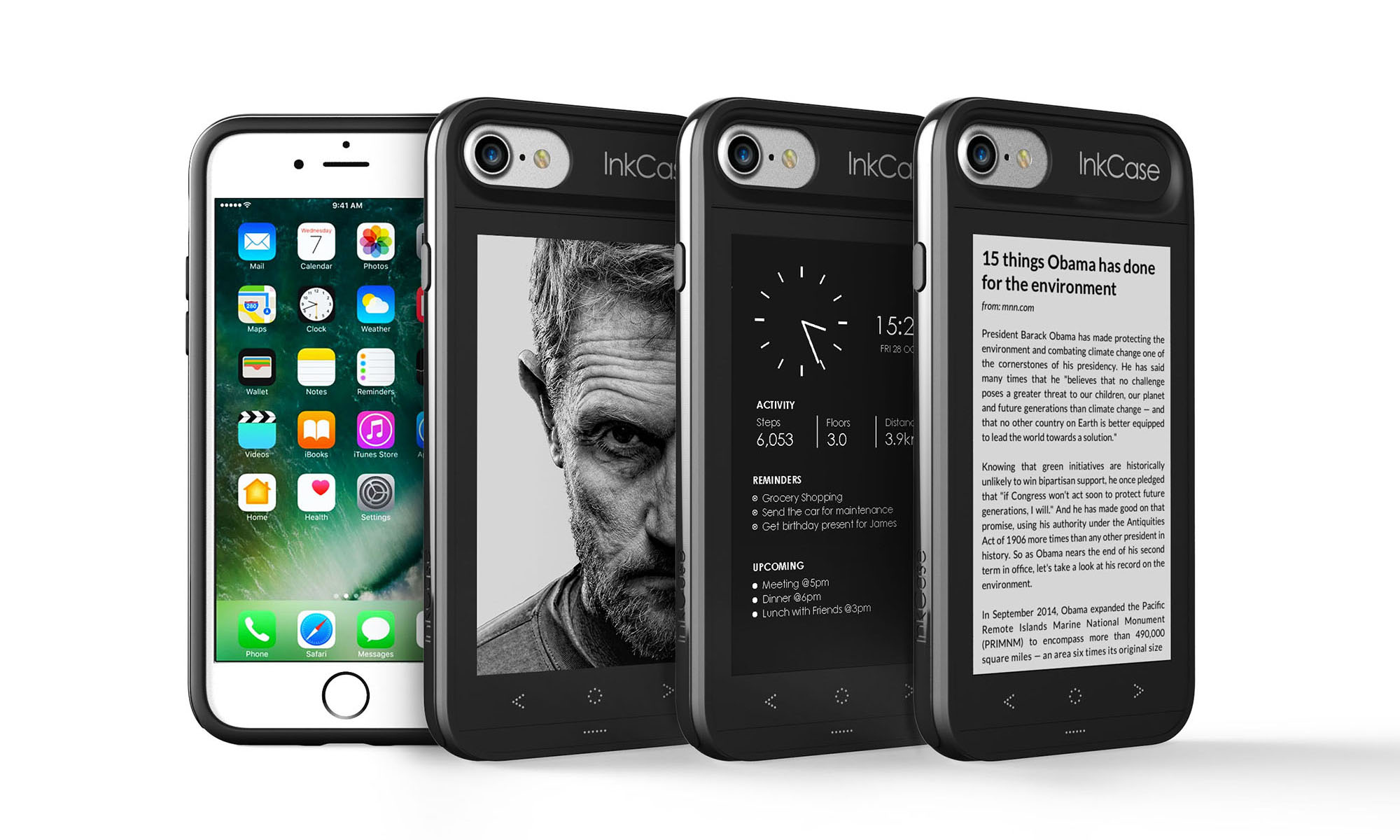
Nowadays mobile device hybrids are all the range as firms come up with all sorts of interesting combinations. One such example is Oaxis’ InkCase which transforms your iPhone into an e-reader. It adds a second screen to the back of your phone, allowing you to read anywhere, any time.
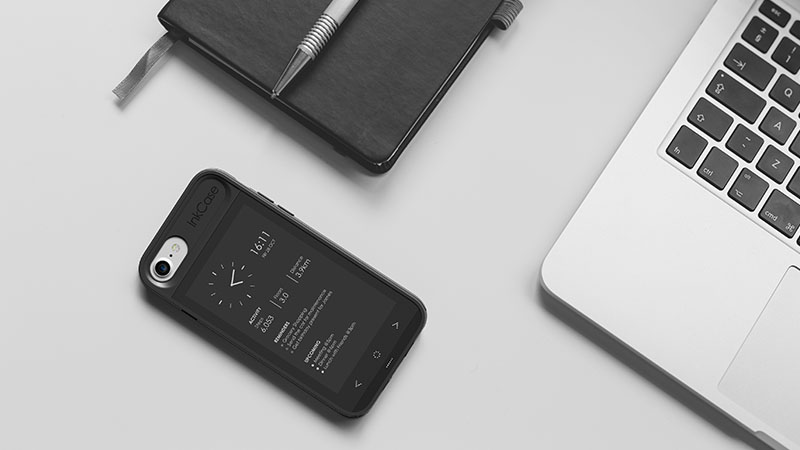
Inkcase allows you to keep your to-do list and schedule constantly visible on the back of your phone.
Never forget another errand again with Inkcase!

Thanks to this trend, E Ink has gained more interest as companies try to improve their products in terms of power consumption, speed and functionality. In fact, just recently Onyx International has revealed a rather interesting prototype – its Onyx Boox Typewriter which is essentially a 2-in-1 E Ink laptop. Yup, you read that right. Onyx has managed to combine an E Ink display with a full fledged laptop, not merely a tablet!
So what’s the big deal with E Ink screens? Well, not only do they consume much less power than LCD and AMOLED screens, they are also much gentler on our eyes. One charge can last a typical e-reader for weeks! However, E Ink screens are also more limited in terms of video playback, colour display and the refresh rate. This has as such limited the usage of E Ink to e-readers mostly. Onyx however, thinks that the Onyx Boox Typewriter may just be the gamechanger.

What is it?

The Boox Typewriter is actually a rather unconventional Android device. It uses a old 1GHz Cortex-A9 processor with 1 GB of RAM and 16 GB of storage. The device also runs the older Android 4.0 version. Unlike your usual e-readers, the Onyx Boox Typewriter has a metal body and hence looks and even feels like your average 2-in-1 detachable laptop. The most notable difference is that the Boox has a 9.7-inch 1280×825 E Ink display. This allows the Boox to be used as an e-reader when detached from the keyboard. It doubles as a word processor, black and white web browser, and more with a screen that is easy on the eyes. The device also supports an electromagnetic (EMR) pen, allowing users to scribble on the text.
Onyx is marketing the Boox as the perfect tool for people who work on the move and need to type outside with minimal eye strain. The device will definitely also be useful for students and bookworms too! That being said, Onyx has to resolve the problems caused by the E Ink display. The incompatibility of E Ink’s extra slow refresh rate with the user’s fast typing is one such issue. Also the weight of the metal frame can be cumbersome too. Since Boox is only expected to launch until early 2018, here’s to hoping that Onyx uses the time they have to work out all the kinks!

See also: LCD screens: Shedding light on the damage done

(Published on Oaxis, 27 April 2017)

Here’s the future of networking: E Ink Badges!

Plastic Logic is working together with Blendology to combine its bi-stable electrophoretic display, based on a unique OTFT backplane, with Blendology’s oneTap technology. Blendology built a reputation for itself as an event solutions company with its unique interactive oneTap technology. It allows users to connect and network with a simple tap of their special delegate badges

Why E Ink?

While developing its trademark badges, Blendology realised that the display would be imperative. The badge needed to have all the physical characteristics of a traditional paper exhibition badge while retaining interactivity.
The firm uses Plastic Logic’s 4-inch E Ink display, including a logic controller that acts as an interface between the badge and its app. One badge costs US$60 but since it’s designed for reuse, the cost will be covered over time
Plastic Logic’s E Ink display is sturdy enough for the usual taps and drops the badges may undergo. Due to the extremely low power consumption, a single charge can last the badge for many days. The lightweight nature also ensures the comfort of delegates even when worn for long periods of time.
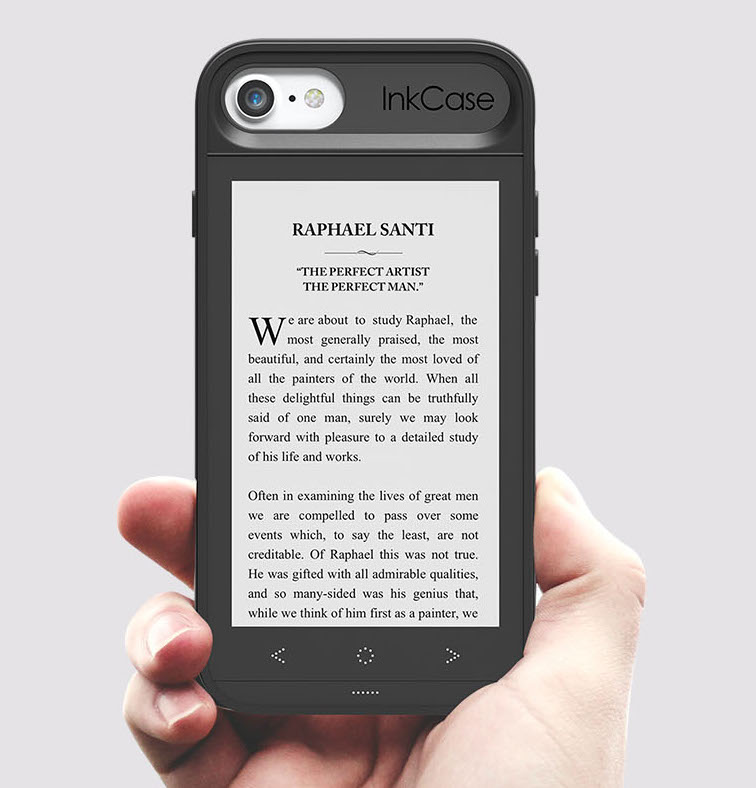
Moreover, the badges can keep the display on with no additional power consumption, providing a paper-like display. These characteristics have made E Ink displays the prime choice for products such as the InkCase which gives you the best of both worlds. The InkCase adds an E Ink screen at the back of your phone, allowing you to read anywhere and any time!
Oaxis InkCase e ink ereader
Put your library in your pocket with the InkCase!

The badge utilises the display aptly, maximising the functionality since users can change the content displayed accordingly. The badges can as such double as venue maps, conference agendas and even more. The increased degree of customisation opens up a whole new level of potential for the events industry.

The potential of Blendology

Currently, more than 350 events in 18 countries have used the badges successfully. Blendology is also looking into integrating these badges into other markets such as corporate use and personal electronic business cards.
Keep an eye out too for future collaborations between Blendology and Plastic Logic! Blendology has also expressed interest in working together with Plastic Logic in a venture to produce the world’s thinnest watch in the future.
(Published on Oaxis, 25 April 2017)

Sync up the entire family’s schedules seamlessly with Magic Calendar!

From the way we read to the signage we walk past every day, E Ink has been increasingly incorporated into our daily lives. The InkCase for example, lets you transform your phone into an e-reader with a secondary E Ink screen at the back of your phone.
InkCase i7 e-reader, productivity, reading
Read anywhere, any time with InkCase!

While many may argue that E Ink’s progress is indicative of the way technology has taken over our lives, this new E Ink product takes us right back to the good ol’ days of wall calendars.
E Ink, Magic Calendar, Productivity, family time


So what exactly is the Magic Calendar?

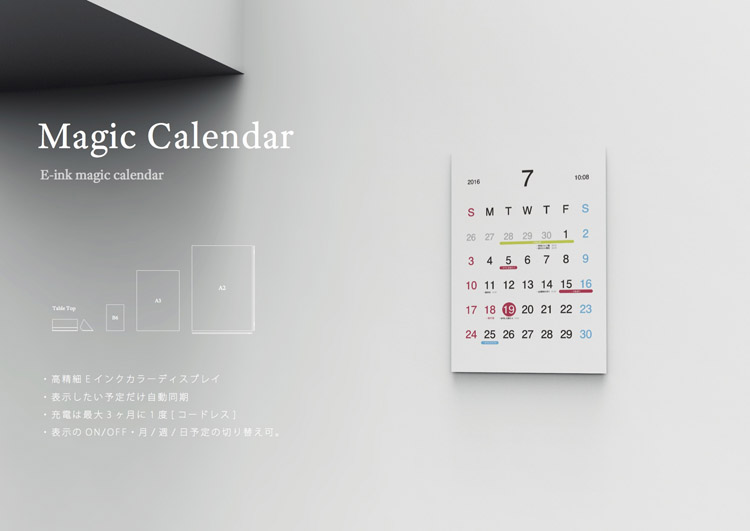
On the surface, the Magic Calendar looks just like your typical paper wall calendar. It actually uses a colour E Ink display to organise your schedule cleverly. The E Ink screen hidden in the minimalistic design allows the calendar to display changeable media. Moreover, thanks to E Ink’s low power consumption, each charge can last up to 3 months!
The brainchild of Kosho Tsuboi Design, the Magic Calendar essentially inherits the best of both the smartphone and traditional calendar. Combining the familiar aesthetics of paper and the speed of smartphone calendars, it’ll be helpful in boosting your productivity, be it at home or in the office!
With the ability to sync and display several users’ Google Calendars in different colours, the Magic Calendar makes it so easy for users to sync up their schedules without any hassle. Just think about how easy it’ll be to arrange those family dinners or office meetings! No need to text everyone to ask for their schedules anymore; just log in and let the Calendar work its magic.
Need more persuading? Go ahead and watch the video to see how wonderfully simple and effective the calendar works!
The Magic Calendar is part of Google Android Experiments program which seeks to create new ways to use technology. I think it’s more than fair to say that it has definitely achieved that!
Currently, it’s still in the prototype stage while the designers work out some of the technical hurdles. However according to Kosho Tsuboi Design, they already have a fully-working version and are proceeding with a completed design. One thing is for sure – the Magic Calendar definitely brings us another step closer to blurring the boundaries between analog and digital technology.
(Published on Oaxis, 21 April 2017)

Check out Microsoft’s latest patent – a dynamic E ink keyboard!

The computer has been changed and improved so many times in recent years that we have come to expect changes each year now. Yet the keyboard, an essential component, has remained static despite all the changes. Many major players are now looking to reinvent the keyboard with existing technology such as E Ink. For example, the InkCase gives your iPhone a secondary screen by adding an E Ink display at the back of your iPhone!
InkCase i7 schedule daily planner
Display your daily schedule with minimal power!

As such, a series of smart keyboards have entered the market such as those offered by Microsoft and Lenovo Yoga Book’s Halo Keyboard. Microsoft is pushing ahead of its competitors with its latest patent showcasing an E Ink keyboard cover.

What is it?

Filed in September, the patent shows a device that includes a normal emissive display and an E Ink display which covers the usual display. It also doubles as an actual cover case. Of course, the E Ink display in itself is not new. The crux of the patent lies in how the two displays work together.
The Yoga Book has a static display not etched out on the keyboard. Users can change content accordingly. However, Microsoft’s patent showcases how the display can be used for, beyond touch input. This addresses one of the complaints regarding the unchanging nature of the Yoga Book’s keyboard.
The real hook is a feature similar to MacBook’s TouchBar feature. The regular screen will be situated near the E Ink display which will show controls. The ‘TouchBar’ detailed in the patent is on the emissive side of the device and is not really considered as part of the keyboard.
With all that said, keep in mind that this is still just a patent. It is more than likely that Microsoft would take a few years to bring this into the market. Stay hopeful though; most of the technology needed to realise the patent is already available! In fact, the cancelled Microsoft Courier is rather similar. So keep your fingers crossed!
(Published on Oaxis, 19 April 2017)

Popslate shuts down after raising $1m on Indiegogo

oaxis inkcase smart iphone case ereader
Oaxis’ InkCase is the world’s first phone case to add a second screen to your phone!
While Oaxis’ InkCase was the original phone case which added a secondary E Ink screen to your iPhone, Popslate gained popularity and developed popSLATE. After the initial success, the company announced the sequel popSLATE 2. It would double as a battery charger and also have an improved screen.
Through Indiegogo, Popslate raised over $1.1 million to manufacture popSLATE 2. The announced date of delivery was July 2016. Now, after a lengthy delay in shipping out, the company suddenly announced its bankruptcy in an update to its backers. The email update also informed backers of the lack of refunds and order delivery too. This naturally resulted in a furious backlash. Backers were further infuriated with the lack of explanation as the email update was apparently the last update they would receive regarding Popslate.

What caused Popslate’s downfall?

The reason for this failure, according to CEO Yashar Behzadi and CMO Grey Moon, was largely financial in nature. Preparations for popSLATE 2’s manufacturing consumed used up much of the company’s funding. Technical problems with its design impeded progress. The firm also pushed shipping back from July 2016 to October due to insufficient initial prototypes.
Apple’s iPhone 7  announcement prompted a foray into redesigning the device to fit both the iPhone 6 and 7. This exacerbated the situation. Popslate soon realised its attempts were redundant as such a device failed to comply with Apple’s Made for iPhone program.
Things didn’t improve in 2017 when Popslate found out that its prototypes failed Apple’s certification testing as popSLATE 2 reduced the iPhone’s ability to transmit RF transmissions. Moreover, they also encountered issues with charging as well, causing an even longer delay. The company pushed delivery back to March and suspended refunds as they tried to resolve the problems.
Despite managing to raise $1m, it was still insufficient to cover the additional costs the string of problems caused. This ultimately brought about the downfall of Popslate, earning the dubious honour of being one of the more epic crowdsourcing failures.
While it may be true that crowdsourced projects are essentially based on faith, the curt farewell message offered by Popslate leaves much to be desired and that is loudly reflected in the outpouring of bitter messages by backers.
(Published on Oaxis, 19 April 2017)